Metals Hedging
Shibuya-Sakura Industries
See how Pillar helped SSI cut risk, boost efficiency, and scale trading by 40%

$1M+
Protection from Market Losses
40%
Increase in Revenue
80%
Decrease in Unhedged Exposures
OVERVIEW
When Singapore-based Shibuya-Sakura Industries (Shibuya) faced mounting challenges in managing price volatility across their ferrous scrap trading operations, they turned to Pillar's automated macro hedging platform for a solution. As a trading house specializing in ferrous and nonferrous metal scrap, Shibuya’s exposure to physical positions and buyer risk demanded a more sophisticated approach to risk management.
THE PROBLEM
Prior to implementing Pillar's platform, SSI was left exposed to market volatility that often resulted in missed opportunities, painful negotiations, and inefficient position management. The company needed a solution that could respond to market movements in real-time while maintaining precise control over their risk exposure.
THE SOLUTION
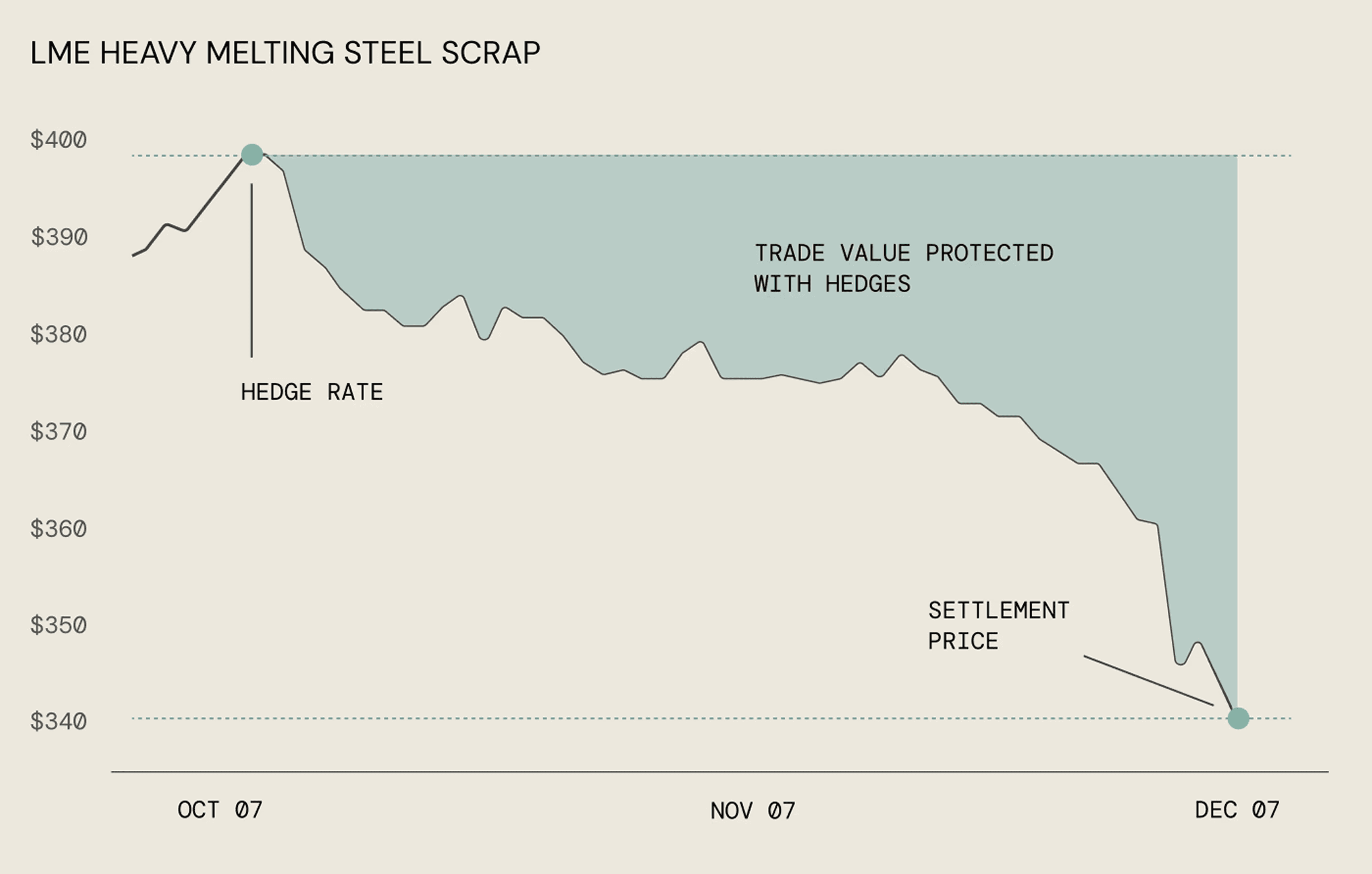
Pillar's automated hedging platform transformed SSI's approach to risk management through continuous market monitoring and dynamic hedge ratio adjustments. The platform's machine learning algorithms analyzed market conditions and trading patterns to optimize hedging strategies specific to HMS 80:20 grade material. By integrating with major futures exchanges, the system executed trades automatically, eliminating costly timing delays and reducing operational overhead.
The results proved transformative. SSI achieved a remarkable 30% improvement in hedging effectiveness, with a 40% reduction in unhedged exposure across their trading book. The platform's implementation took just six weeks, and SSI realized full return on investment within four months. Operational costs decreased by 15% annually through automated execution and position management.
Furthermore, the enhanced price risk management capabilities provided SSI with greater confidence in their trading decisions. The ability to maintain optimal hedge ratios automatically meant traders could focus on identifying new opportunities rather than managing existing positions. Working capital utilization improved as the system's precision reduced over-hedging and associated margin requirements.
CONCLUSION
The success of this implementation highlighted the power of combining automated execution with sophisticated risk analytics. SSI's experience demonstrates how modern hedging platforms can deliver substantial improvements in both risk management and operational efficiency for trading houses operating in volatile commodity markets.